


Women Business Leaders on How A.I. and Risk-Taking Are Driving Them Forward: “If You Don’t Change, You Don’t Prosper”
Women Business Leaders on How A.I. and Risk-Taking Are Driving Them Forward: “If You Don’t Change, You Don’t Prosper”

Christina PerrierThu, October 29, 2026 at 9:50 PM UTC
0

Janine Rubenstein, Amanda Agati, and Kameryn Stanhouse sit on a panel titled “Who’s in Your Pit Crew: Building Wealth for the Long Run” on October 23, 2026, in Austin, Texas.Credit: The Female Quotient
Just one day into the four-day, high-octane spectacle that is the Formula 1 United States Grand Prix in Austin, Texas, The Female Quotient, a global community of women in business, held a series of empowering discussions, in collaboration with F1 Academy, on October 23. In one panel, titled “Who’s in Your Pit Crew: Building Wealth for the Long Run,” sponsored by PNC, People editor-at-large Janine Rubenstein moderated a conversation with Amanda Agati, chief investment officer for Asset Management Group at PNC, and Kameryn Stanhouse, vice president of global sports and entertainment partnerships at IBM, about the top-of-mind financial tools, practices, and support that can help drive women forward.
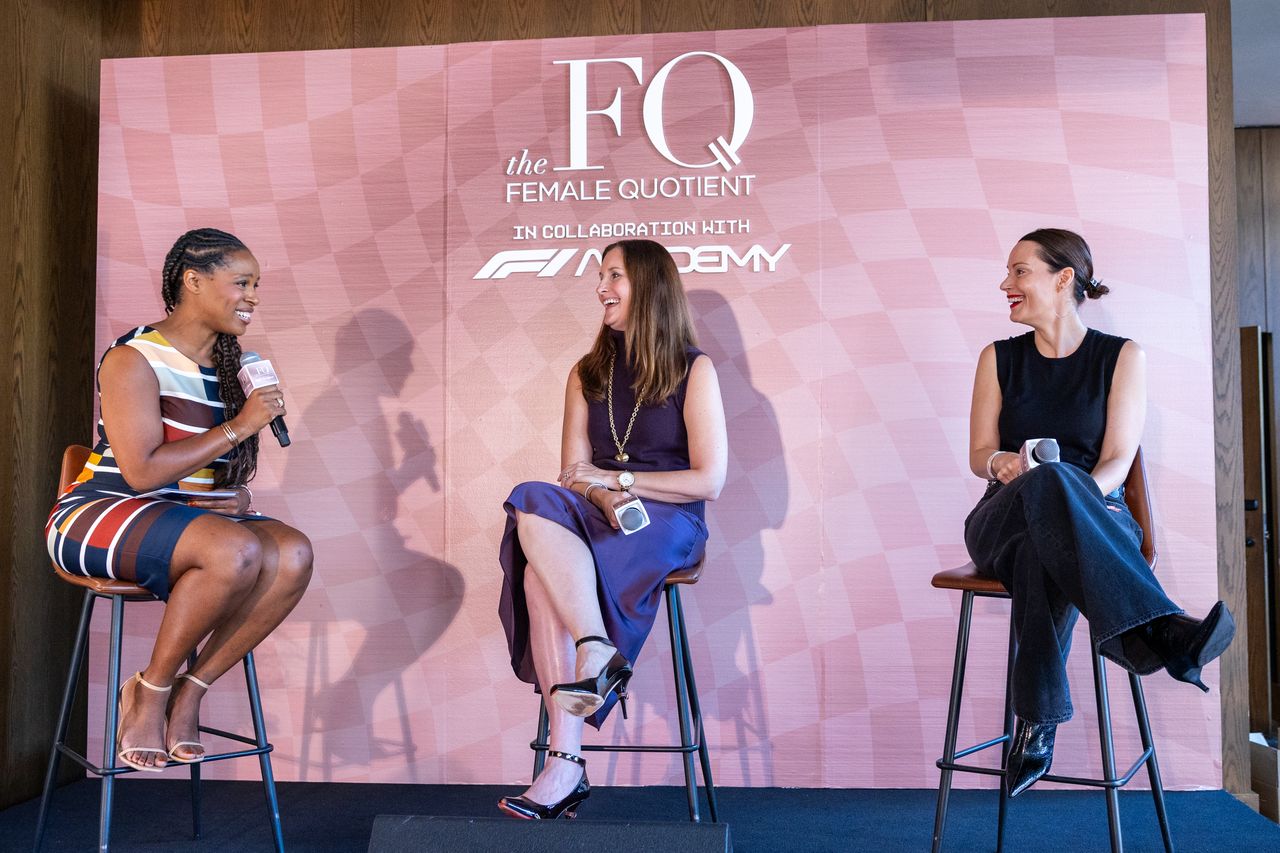
Janine Rubenstein, Amanda Agati, and Kameryn Stanhouse sit on a panel titled “Who’s in Your Pit Crew: Building Wealth for the Long Run” on October 23, 2026, in Austin, Texas.Credit: The Female Quotient
There are few conversations one could have today that don’t veer into the topic of artificial intelligence—and that was the duo’s first pit stop. Speaking to a group of business and sports executives (and enthusiasts!), some fittingly toting bags with Women Are Not Just in the Race—They’re Leading it emblazoned across them, Agati put it plainly: “My world of investing, markets, the economy are moving at warp speed.” Policy uncertainty in government is a large disruptor (“if the red and the blue parties in D.C. could manage to work together, what a dream come true for investors”), as is A.I. “We’re constantly trying to figure out how to bring in the new information,” Agati says, adding that that often includes asking one critical question: What’s the signal versus the noise? “At the beginning of the year, everybody was all-in on A.I. And now—even in the last few trading days—we’ve seen such a shift; everybody’s worried about it,” Agati explains. “Once it was a key driver of portfolios and wealth creation, now we have the brakes being jammed. We’re pulling into the pit and taking a little bit of pause around all things AI.”
The long-term economic implications of A.I. haven’t been fully realized, but for Agati’s day-to-day operations, it’s a “sidecar experiment” that helps them work more efficiently. “We have not gone to a place in our investment world where AI is in the driver’s seat making decisions. It sits alongside our portfolio managers. It has made recommendations. …I don’t expect us to go all-in on AI [and get] rid of my entire investment team, but we will lean further into use cases that make us faster, better.” As Agati looks to the future, she’s most interested in the “next wave of innovation” for how A.I. could “change the trajectory of growth for a business.”

A woman’s bag that reads “Women are not just in the race—they’re leading it,” during a panel titled “Who’s in Your Pit Crew: Building Wealth for the Long Run” on October 23, 2026, in Austin, Texas.Credit: The Female Quotient
For Stanhouse, who works with institutions that have “longstanding history and tradition,” such as the Masters Tournament and Wimbledon, her team’s struggle lies in getting clients on board with new technologies. “There’s a lot of trepidation around [A.I.]. Sports, though, is like the gateway drug for A.I.,” she jokes. “You want real-time stats, data analysis, and all of your favorite players at the palm of your hand? Impossible without A.I.” She tries to show the positive impact A.I. tools can have through “bite-sized manners” to get clients comfortable with rolling out more. “Some of the solutions we provide them have really changed the pace of their business,” she adds. Don’t get her wrong though, she sympathizes with many people’s top worry: Is AI going to take my job? Her team reached some peace of mind by participating in an exercise in which they wrote down things they hated about their jobs—reporting and automation—inside of a circle, and things they loved—building creative campaigns and partnerships, being on site, meeting with talent—outside of the circle. “Eighty percent of the things we hated could be managed by A.I. That wasn’t taking someone’s job. That was creating efficiency and allowing people to focus their time on the things that matter most and fill their heart,” she continues.
Advertisement
A.I. usage in the office is one thing, but personal usage is a different story for Agati. “[I had] my identity stolen the last couple of years,” she admits. “There’s a lot of skittishness from a personal usage perspective. Like, I have to hand over my passwords to A.I.? What does that actually mean? What is the governance around it?” She doesn’t plan to “lean all-in,” at least not right now. Stanhouse, meanwhile, couldn’t have made her stance clearer: “I love AI.” Her new obsession is an invite-only platform called Instinct, which she describes as “an assistant in your iMessage.” It’s “basically planned my wedding,” she shares, explaining how it found hotels, got quotes and negotiated prices with vendors, made reservations, and “waited in line” to make sure she and her partner got the courthouse appointment they wanted. “I have a crazy job, and I travel all the time, and I have no time to talk on the phone with people or to send all of these emails. My partner has a very similar life,” she added. “[Instinct has] been amazing.”
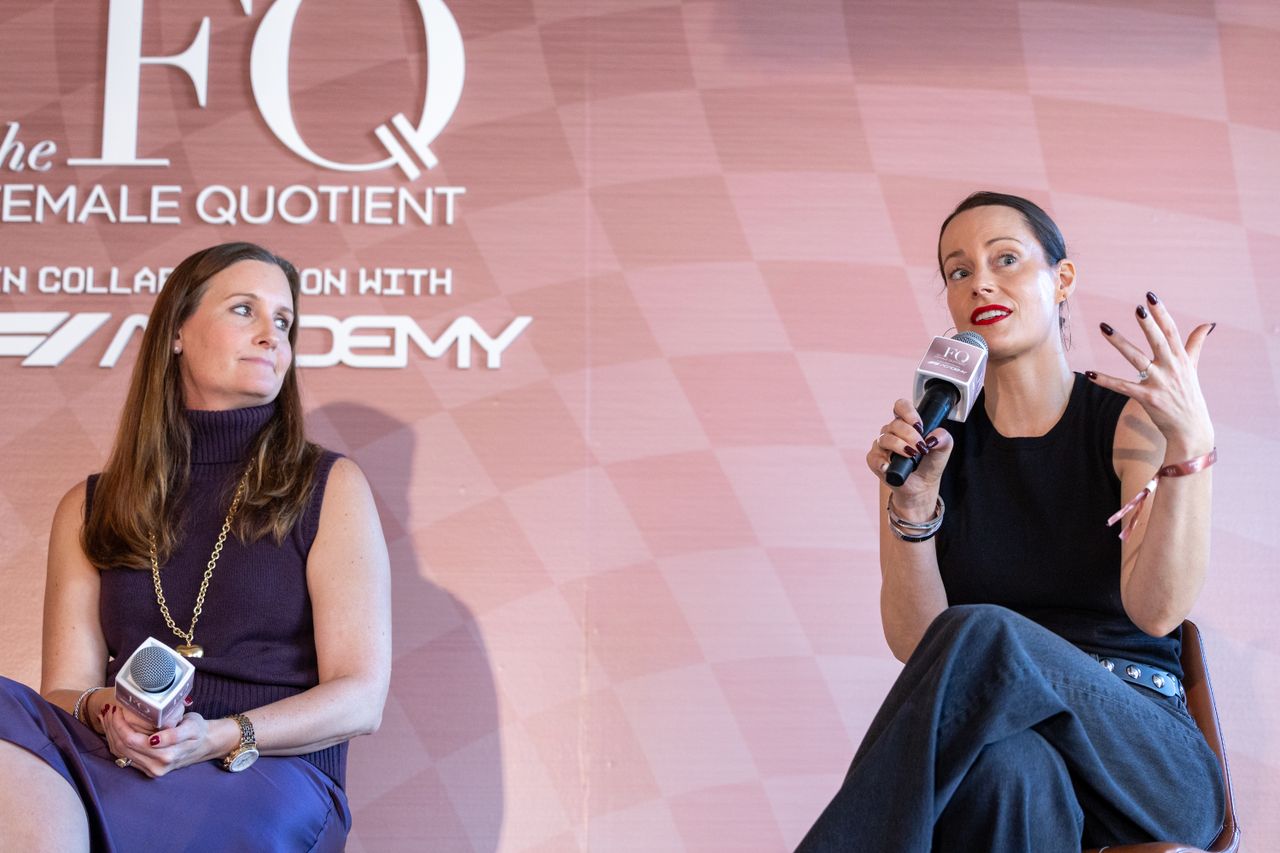
Amanda Agati and Kameryn Stanhouse sit on a panel titled “Who’s in Your Pit Crew: Building Wealth for the Long Run” on October 23, 2026, in Austin, Texas.Credit: The Female Quotient
Whatever your A.I. preferences are, however, it cannot replace the need for a “personal pit crew,” as Rubenstein endearingly calls it. Mentors, colleagues, family, friends, a “personal Yoda,” as Agati says she has—“the right rolodex of people to call on for the myriad of situations that you might face.” Agati admits, early in her career, she held the all-too-familiar sentiment for many women: “I thought I had to do it all.” It took her a while to learn the importance of being vulnerable and asking others for help: “You cannot be successful in the long run without having trusted confidants.” Stanhouse concurs, referencing her tight circle of friends, who “all have very badass careers in different industries,” and her professional career coach. Different industries and different backgrounds provide a pool of varied perspectives for bouncing ideas around about anything from negotiating salaries to making difficult management decisions. “It’s really lonely at the top of leadership,” Stanhouse says. “You have to make tough choices.”
So, you have the resources and the relationships—next comes the risk. From an investment standpoint, Agati says her personal risk tolerance “is almost infinite”—but that shouldn’t necessarily be yours. Having worked in investment banking for a “long time,” she feels she has an “information edge,” but she cautions listeners: “Don’t do what I’m doing. Listen to the advice.” Generally, the amount of risk one should take differs “if you’re building [wealth] versus you already have it,” but it all comes down to being tactical and considering your long-term goals. “It’s singles and doubles, not home runs,” she says. For Stanhouse, who works for a 115-year-old company, she often finds herself encouraging risk-taking. “Things [at IBM] have been done for a really long time the same way, not necessarily because it’s the right thing to do, but it’s because of the way it’s always been done.” When she joined the company, she made sure to start asking Why? “A lot of people view change as risk,” she continues. “But if you don’t change, you don’t prosper, you don’t grow. If you’re not changing, you’re dying. …Fail fast, move forward.” That’s her attitude in both business and in life, where she notes she’s taken the leap in ways such as changing jobs. “My boss would say you should be 10-percent comfortable in anything that you’re doing and 90-percent uncomfortable. We’ve developed a muscle for that.” Now, it’s time to rev it up.
on InStyle
Source: “AOL Money”
