


People Started Giving Homemade Lasagnas To Neighbors. What Happened Next Was Incredible.
People Started Giving Homemade Lasagnas To Neighbors. What Happened Next Was Incredible.

Andria Larson Wed, October 28, 2026 at 12:05 PM UTC
1

“We’ve become too comfortable celebrating nonprofits for doing more with less,” writes Andria Larson, co-founder of the nonprofit Lasagna Love.Courtesy of Andria Larson
For the last six years, I’ve seen firsthand how compassionate we can be toward our neighbors in need. That’s all thanks to my involvement with Lasagna Love, a grassroots nonprofit that connects neighbors who want to cook for neighbors who could use a homemade meal.
When the pandemic hit, I felt helpless. I had groceries and knew how much it meant to have a homemade, hot meal during uncertain times. So I baked lasagnas and took to social media to ask if anyone in my community needed one.
Read: Older Puerto Ricans Are Battling The Water Crisis Head-On
It was a simple gesture that exploded from there. Neighbors helping neighbors. No one has to prove their income or justify needing help.
Since 2020, I’ve helped Lasagna Love grow into a massive network of 61,150 volunteers who have completed deliveries, providing more than 750,000 lasagnas and feeding about 3,000,000 people. Our reach is national, but the work happens in local kitchens and on neighbors’ doorsteps.
I hear stories from recipients all the time. One mother described losing her job and worrying about feeding her children. When a lasagna arrived, she could breathe a little easier. It didn’t pay her bills, but someone had shown up, and for one evening, she didn’t have to figure everything out on her own.
Another woman struggling with cancer shared she didn’t have the energy to cook for herself. She had lost 40 pounds. When a lasagna showed up at her doorstep, she realized that not only did she have to start taking better care of herself, but she wanted to find the strength to survive so she could pay it forward to someone else going through cancer alone.
Also Read: I Bought Baby Formula For My Neighbors Who Depend On SNAP. It Was A Big Mistake.
The people making those moments possible have bills and struggles, too. Our volunteers buy ingredients, cook and deliver lasagnas using their own resources. We have 19,328 volunteers who have paused their volunteering, most of them citing increased ingredient costs. People can still want to help and need to step back because their grocery budget won’t stretch any further.
Others stretch ingredients and organize lasagna ingredient drives with businesses, co-workers and friends. We help cover groceries for some through grants, donations and Patreon sponsorships when funding is available. Someone has time to cook. Someone else contributes ingredients. Together, they make dinner possible.
Our organization funds the connection itself: the technology, coordination, staffing and volunteer support that bring those neighbors together. We’ve had to pass up grants that required administrative work but wouldn’t cover the people needed to do it. The meal is freely given. Making that connection still costs money.
Americans haven’t stopped caring, but the willingness to help and the ability to afford helping are different things.
Like this article? Keep independent journalism alive. Support HuffPost.
These experiences are why I worry about small and midsize nonprofits well beyond our organization. Americans haven’t stopped caring, but the willingness to help and the ability to afford helping are different things, whether you’re buying groceries or supporting the organization connecting you with a neighbor. We’re asking community organizations and volunteers to carry more responsibility while the resources supporting their work become harder to secure.
Federal funding freezes and terminated grants have increased pressure on nonprofits already facing growing demand and greater competition for charitable dollars. When funding disappears for smaller organizations, the need doesn’t disappear with it. Families still need food. People still lose jobs or get sick. Compassion doesn’t go away, either. Neighbors still want to help. But community organizations are left responding while navigating financial uncertainty themselves.
Life: These Are The Foods People Really Need Amid SNAP Freeze — And How To Donate Them Safely
Advertisement
Disaster recovery makes the need for sustained support especially clear. Two years after Hurricane Helene, local organizations are still helping people repair homes and rebuild their livelihoods. The news moves on to the next story, but the people rebuilding their lives don’t have that option. Being there through recovery is intentional work. Funding needs to last beyond the headlines, too.
Foundations recognize the challenge. A September 2026 report from the Center for Effective Philanthropy found that 93% of surveyed foundation leaders had changed their approach, but only 12% rated their response as very effective. The report also found gaps between the support offered and what nonprofits needed, including help with digital tools, fundraising and legal services.
At a well-resourced, larger nonprofit, departments dedicated to fundraising, technology, communications and program evaluation may each have a dedicated team. That support helps make the work possible, and it should. Small and midsize nonprofits need those capabilities, too, at a scale that fits their work.
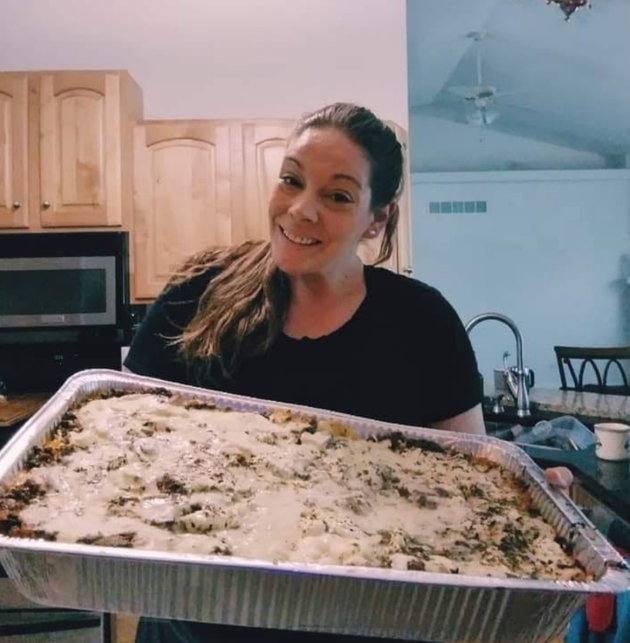
The author poses with a giant lasagna she made for firefighters on Firefighter Appreciation Day.Courtesy of Andria Larson
In a smaller organization, the person identifying a problem may also design and test the solution, put it into practice, train volunteers, manage vendors, answer questions and track results. They create the instructions, explain the work to supporters and troubleshoot when something doesn’t work as it should. If the approach doesn’t work, they rebuild it. And they still have to pay the invoice. The responsibilities don’t disappear because there isn’t a department to handle them.
That matters when we ask organizations to pursue grants, develop partnerships and demonstrate impact. The same person keeping a program running may also be responsible for securing its next source of support. A smaller nonprofit doesn’t need a large institution’s organizational chart. It needs enough staff, expertise and reliable tools to do the work responsibly and show what it accomplishes. Those resources should be part of the investment that helps an organization grow, not something it has to grow large enough to afford on its own.
Family: A Woman Tested Faith Centers' Willingness To Donate Formula. What She Found Says A Lot About Charity In The U.S.
Nonprofit leaders have responsibilities, too. We should examine results, collaborate, seek different sources of support and change approaches that aren’t working. But adaptation takes people and investment. It cannot mean asking an already-stretched team to absorb every new responsibility for free.
Private generosity cannot replace a functioning public safety net, either. Government has responsibilities that shouldn’t be handed to volunteers. Supporting community nonprofits and expecting government to fulfill its responsibilities are not competing ideas.
The way forward starts with asking organizations what they need, then listening. Foundations can fund staff and tools alongside programs, with flexible support that lasts beyond a single year and can grow with the work. Businesses can build local partnerships, even without national publicity. Individuals who have the means can give regularly, offer needed skills or make a valuable introduction.
We’ve become too comfortable celebrating nonprofits for doing more with less. We share the stories and thank the volunteers, then forget what it takes to keep them showing up. Their resourcefulness deserves investment, not an assumption that they’ll always find another way. We can do a lot with a little. But the time has come to do a lot more, for a lot more people. We need to support the organizations making that possible, including the ones we haven’t heard of yet.
Also Read: I Gained Over 42 Million Followers By Helping People In Need. Here's The Part No One Ever Sees.
Get in. Get local. Find the organizations already showing up in your community and ask what they need. Not just during the holidays. Not just when there’s a crisis or a heartwarming story to share.
Americans haven’t stopped caring, and the people doing this work haven’t stopped trying, but the people carrying kindness shouldn’t have to carry the weight alone.
As co-founder and executive director of Lasagna Love, Andria Larson embodies the spirit of service and community that defines the grassroots organization. In addition to overseeing more than 61,000 volunteers who deliver lasagnas to neighbors in need, she oversees strategic growth, financial stewardship, policy development and compliance. Outside of work, Andria is a proud mom currently living in St. Louis, Missouri, where she enjoys attending her daughter’s horseback riding lessons, supporting her son’s band practices, and cooking meals for family and friends.
Do you have a compelling personal story you’d like to see published on HuffPost? Find out what we’re looking for here and send us a pitch at pitch@huffpost.com.
Related... -
I Went To The Social Security Office To Check On What I Was Owed. I Was Shaken By What They Told Me.
This Is The Worst Part Of Looking For A Job Right Now — And No One Is Talking About It
I Built A Career Inspiring Millions. I Thought I Was Doing The Right Thing, Until A Friend Said 2 Words That Changed Everything.
Read the original on HuffPost
Source: “AOL Breaking”
