


Man Utd right to be cautious in transfer market after years of profligacy
Man Utd right to be cautious in transfer market after years of profligacy

Sam WallaceSun, August 30, 2026 at 8:03 AM UTC
0
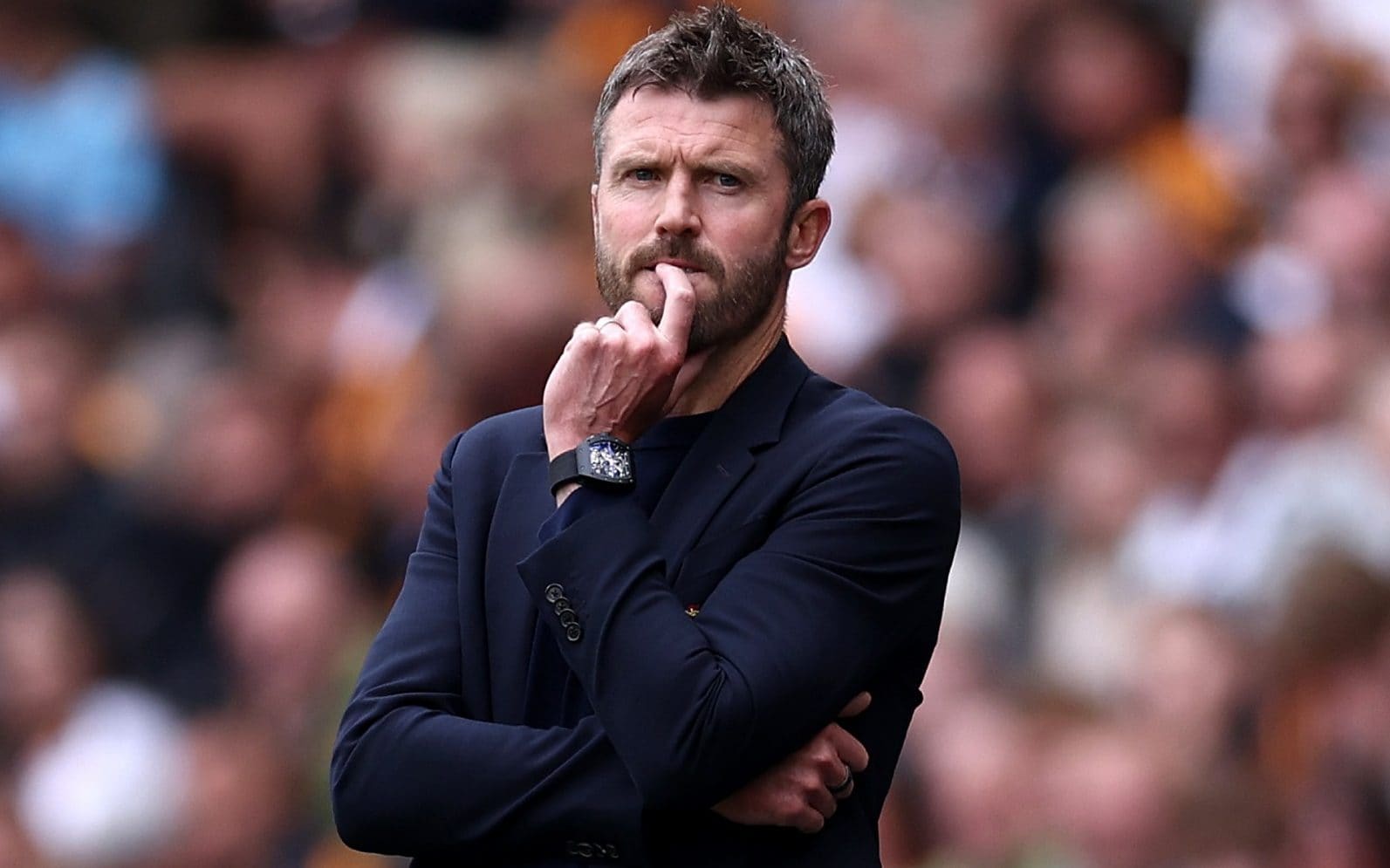
Michael Carrick must manage Manchester United in a new era of conservative spending - Molly Darlington/Getty Images
There may be a new Manchester United left-back by the end of the window on Tuesday night, but he will not be one of the game’s leading candidates in that position. He may well be a loanee, and competition for Luke Shaw and Patrick Dorgu rather than a standout first pick for a problem position.
United are cutting their cloth accordingly. It is the 25th anniversary of one of their most memorable transfer blitzes – Ruud van Nistelrooy, their most exciting young goalscorer, and then Juan Sebastián Veron, then arguably Europe’s best midfielder. Both signed in one summer, both consecutively British record transfer fees.
United broke the same record for Rio Ferdinand the following summer, and would have done it again in 2003 if Ronaldinho had not chosen Barcelona instead. That summer United still made Cristiano Ronaldo British football’s most expensive teenager. Then 12 months later, in 2004, they signed Wayne Rooney.

United made Wayne Rooney the most expensive teenager in British football history in 2004 when he signed from Everton - John Peters/Getty Images
This summer United have spent about £150m on three midfielders – Andrey Santos, Youri Tielemans, and Carlos Baleba. None have the status that those early 2000s signings occupied in an era when United dominated the market. But things have changed. There are much wealthier Premier League competitors now, with a track record of recent success. There are financial controls. There are more than two decades of the Glazers. There are years of decline.
It is a long story but at its heart very simple. United are in a form of austerity. They are attempting recovery from all those years of profligacy – fees and wages on players who did not deliver. The club will almost certainly have their biggest-ever year in terms of revenue this season, in excess of £700m. Even without European football last season, the top-line revenue for 2025-26 is likely to be similar to the record £666.5m for 2023-24. Yet United still lose money every year and that requires borrowing to cover. Those losses are falling but they are still losses.
The big drains on the balance sheet remain – amortisation fees, historic transfer debt, and, of course, the Glazer ownership debt. The Ineos regime, under Sir Jim Ratcliffe, has not always been able to solve those problems, and at times it has added to them. Yet the fundamental point at the heart of it is that United had to begin grinding their way back to financial stability. This is not an easy sell, especially not when ticket prices rise.
This was a summer that might have rewarded an ambitious club. There were nine Premier League managerial changes and, in Arsenal, defending champions with a fine team but by no means out of reach. Yet United will end the window as the only one of the big six not to have spent £100m – or more – on a single player.
One might feel that spending on a footballer is hardly something to celebrate. Nevertheless, it is the way the market is going for the game’s biggest clubs and there was a time when United would have been expected to get there first. They broke the British transfer record three times in the early 2000s just as they had done twice in the 1980s with Bryan Robson and Ray Wilkins. They did so again in the 1990s with Andy Cole and in the 2010s with Paul Pogba.
Advertisement
Yet, one can see why Ineos would hesitate. What United need more than anything is a run of seasons in the Champions League and the huge additional revenue, more than £80m annually, that it delivers. They need a squad that is strong enough that, like Manchester City, it can help fund its own renewal by selling players for big fees without materially damaging competitiveness. The reality is that they need that more than a risky punt on a title season.
It takes time, and a lot of discipline not to turn to the big signing that relieves the immense pressure of expectation. The last major attempt with Pogba ended in recrimination. Now the club have run out of road for mistakes – in terms of big-ticket signings or managerial appointments that cost millions on the way in and also on the way out.

Big names and expensive deals like Paul Pogba and Cristiano Ronaldo are in the past now for United - Carl Recine/Reuters
All of it takes too much of a toll on the balance sheet, and the cumulative effect of those years is now exacting a steep price. A generation of leading England players – Declan Rice, Jude Bellingham, Elliot Anderson – have moved clubs without United even being in the conversation. That was unthinkable 20 years ago.
United used to dominate that market for the best England players. The likes of Ferdinand, Rooney, Michael Carrick, Owen Hargreaves and Ashley Young himself when they became available. They signed the best players from less powerful clubs in the Premier League, as City did in January with Marc Guéhi and Antoine Semenyo.
For the foreseeable future, United are trapped under the Glazer debt and the refinancing this summer at less favourable rates means that it continues to exact a heavy price. It is not that United do not spend – £200m last summer on, among others, three forwards. A further £150m this summer. The difference is that it is notably unspectacular compared to the past. It is informed more by an imperative not to repeat recent errors.
Yet, the basic figures do not lie. United remain astonishing revenue generators in bad times as well as good. A tired Old Trafford still pulls in more match-day revenue than any other Premier League club. The aftershocks of on-field decline – seasons without European football, commercial partner penalties – keep coming. Yet none absorb them more robustly than United.
United have settled for stability
What to make of that great profitability at the heart of United? It is one part miracle and one part curse. It is what enabled the Glazers to pull off their deal of the century and use the club’s wealth to pay for their ownership. That Glazer debt, 21 years on, still sits atop United like the cuckoo in the nest, insisting on its pre-eminence, demanding to be fed before all others. For years that was manageable, but then, as the transfer market mistakes took their toll, and the seasons of mediocrity racked up so it all finally came home to roost.
In the third decade of Glazerdom, 13 years since Sir Alex Ferguson left, 13 years since the last Premier League title, Ineos appear to have made a sober choice. Of course, a title would be nice, but predecessors have shot for the moon and crashed. United would settle for some stability and this is what it looks like. A relatively cautious window of three low-risk Premier League-proven players, two of whom are young enough that they might perhaps exceed expectations.
Meanwhile, the revenue keeps rising. It is the club’s special power. Supporters must be wondering what that day would be like when United were liberated from all those brakes on its ambition. When they are focused on winning trophies rather than servicing debts or covering mistakes made by managers and execs long since gone. It must be said that it still feels a long way off.
Source: “AOL Money”
