


Is This The Oddest BMW To Roll Off The Production Line?
Is This The Oddest BMW To Roll Off The Production Line?

Joseph PudlewskiSat, August 29, 2026 at 10:30 PM UTC
0
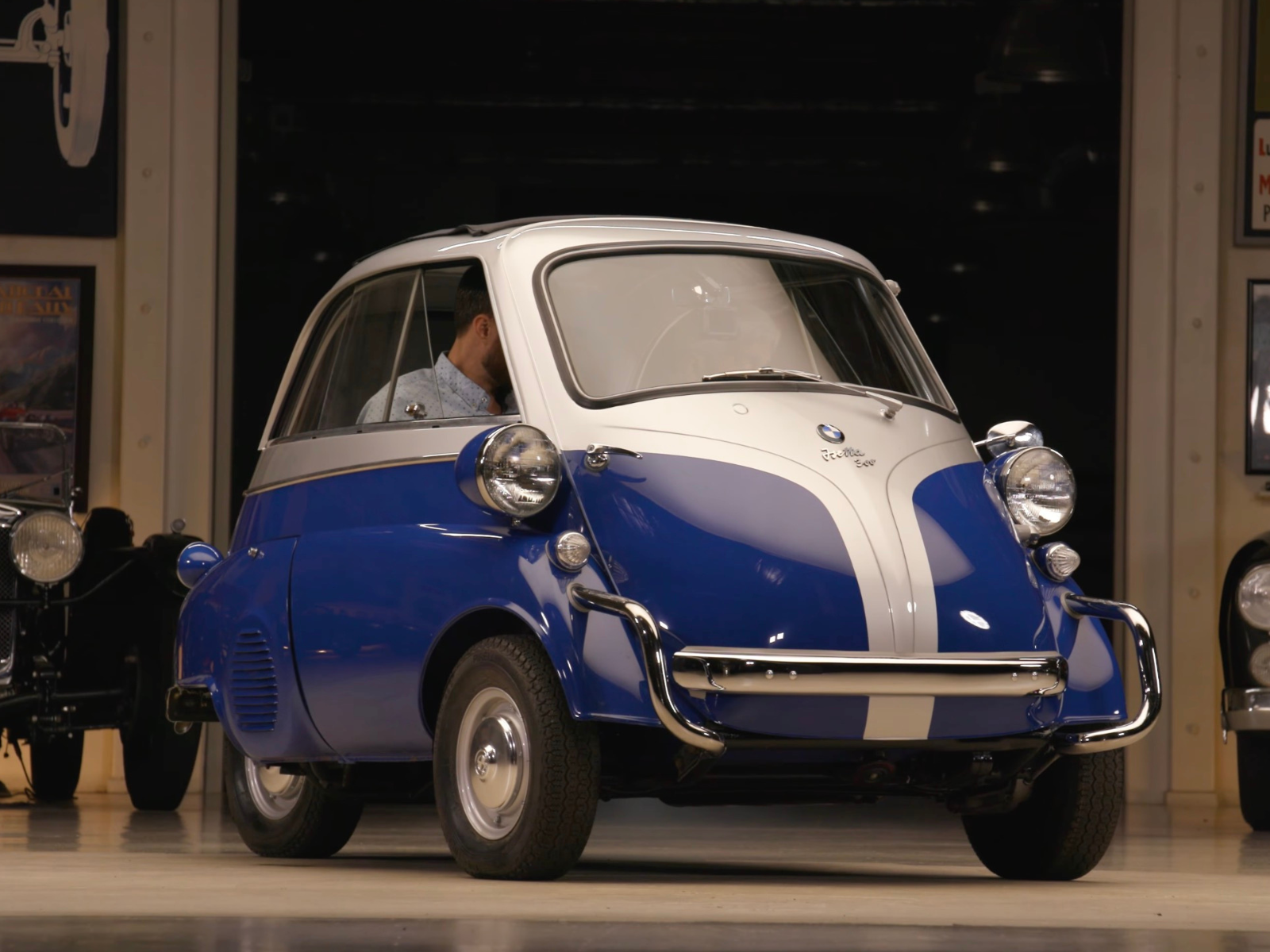
In the years following World War II, much of Europe was left picking up the pieces of their respective economies and militaries. As a result, European consumer purchasing power was lacking, to say the least. Small cars and motorcycles became top picks for the average buyer, and BMW answered the call with one of the oddest, yet most iconic cars to ever come off the production line.
Didier Messens / Getty ImagesPost-war BMW and the Isetta
Like most German companies, BMW found itself in a tough spot in the years following World War II. The country had been split in two and fuel and materials remained expensive. Motorcycles and upscale cars had been the German automaker’s bread and butter, but as conventional vehicles became more expensive and motorcycles declined in popularity, they needed a more appealing product.
Sandro Leardini / Getty Images
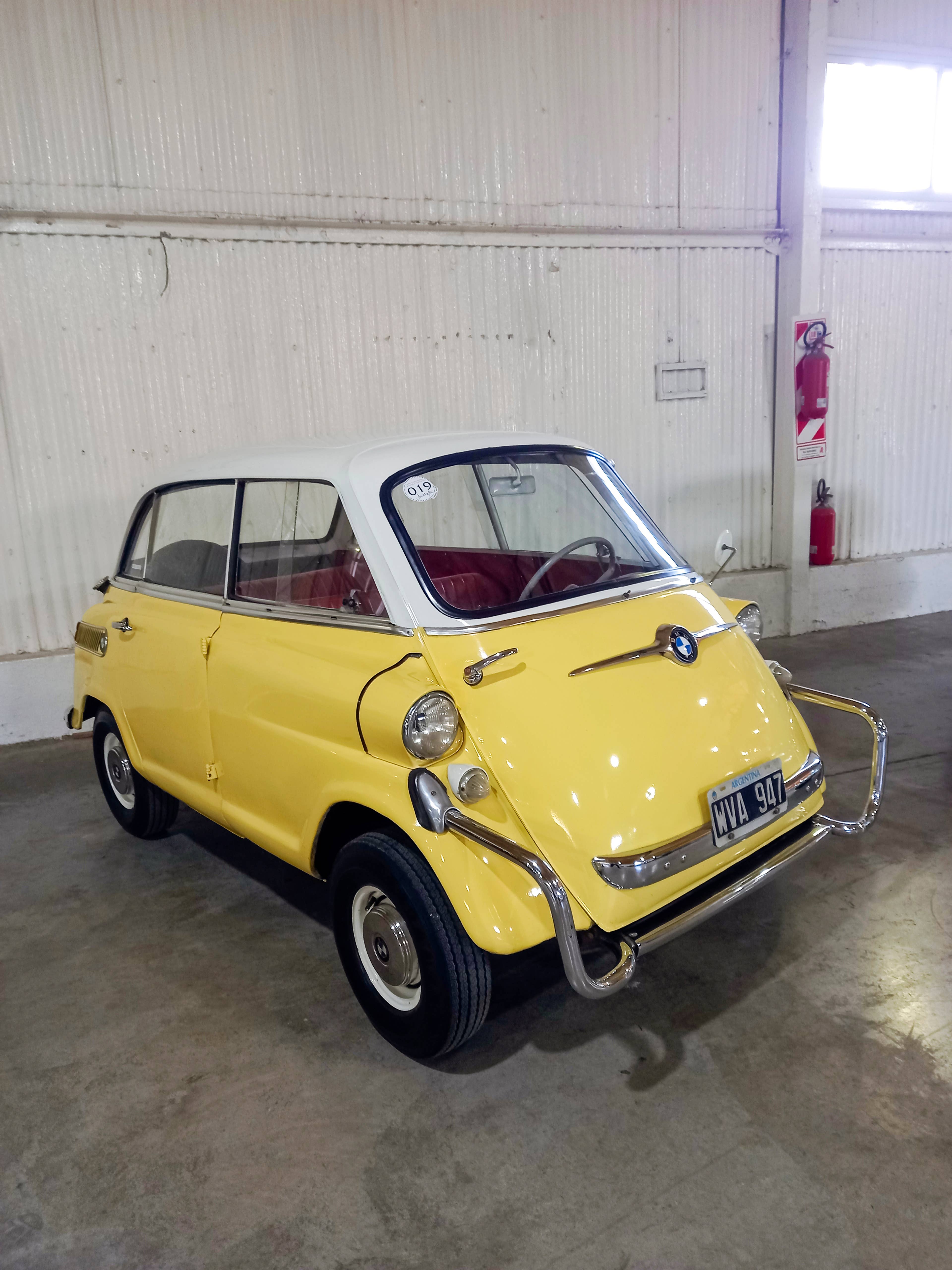
While BMW had sold upwards of 30,000 motorcycles in 1954, consumer preferences headed in a different direction in the years that followed. As a result, the manufacturer’s facility in Munich faced a decline in work, and the company needed something to fill production lines. The Isetta, a microcar of Italian design, eventually caught the automaker’s eye.
The Isetta was originally developed by Iso SpA, a company that produced motor scooters and small trucks. As the only small car on the lineup at the time, it was an outlier. The microcar stole the spotlight at the 1953 Turin Motor Show, but it wouldn’t be until the 1954 Geneva Motor Show that it caught the attention of BMW.
Motor Cities
In October 1954, BMW became licensed to build the Isetta, but the German automaker did much more than that. BMW engineers made major modifications, including customizing the chassis, suspension, and other components for German roads. The automaker also swapped out the Iso SpA motorcycle engine for one of its own.
Thinking about selling your car? Get an instant cash offer online now. Click here to get started.Unconventional by design
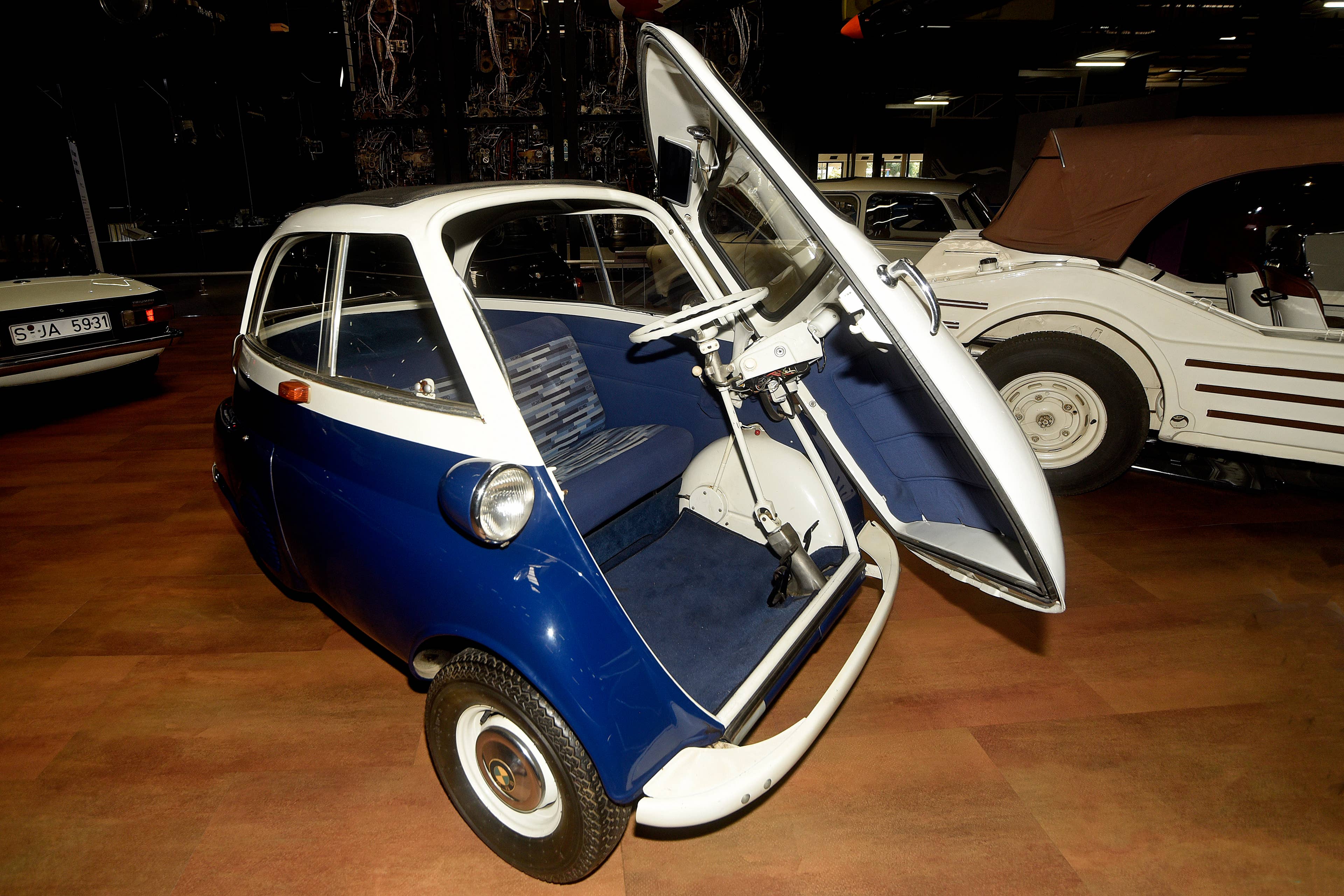
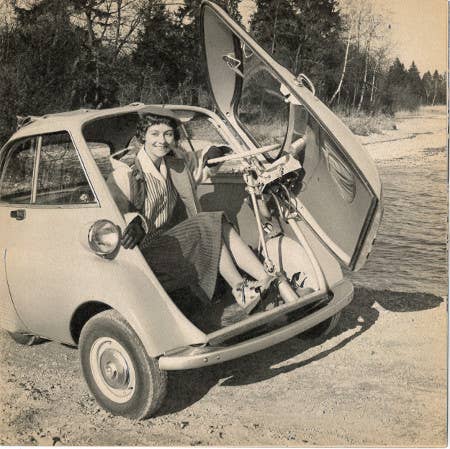
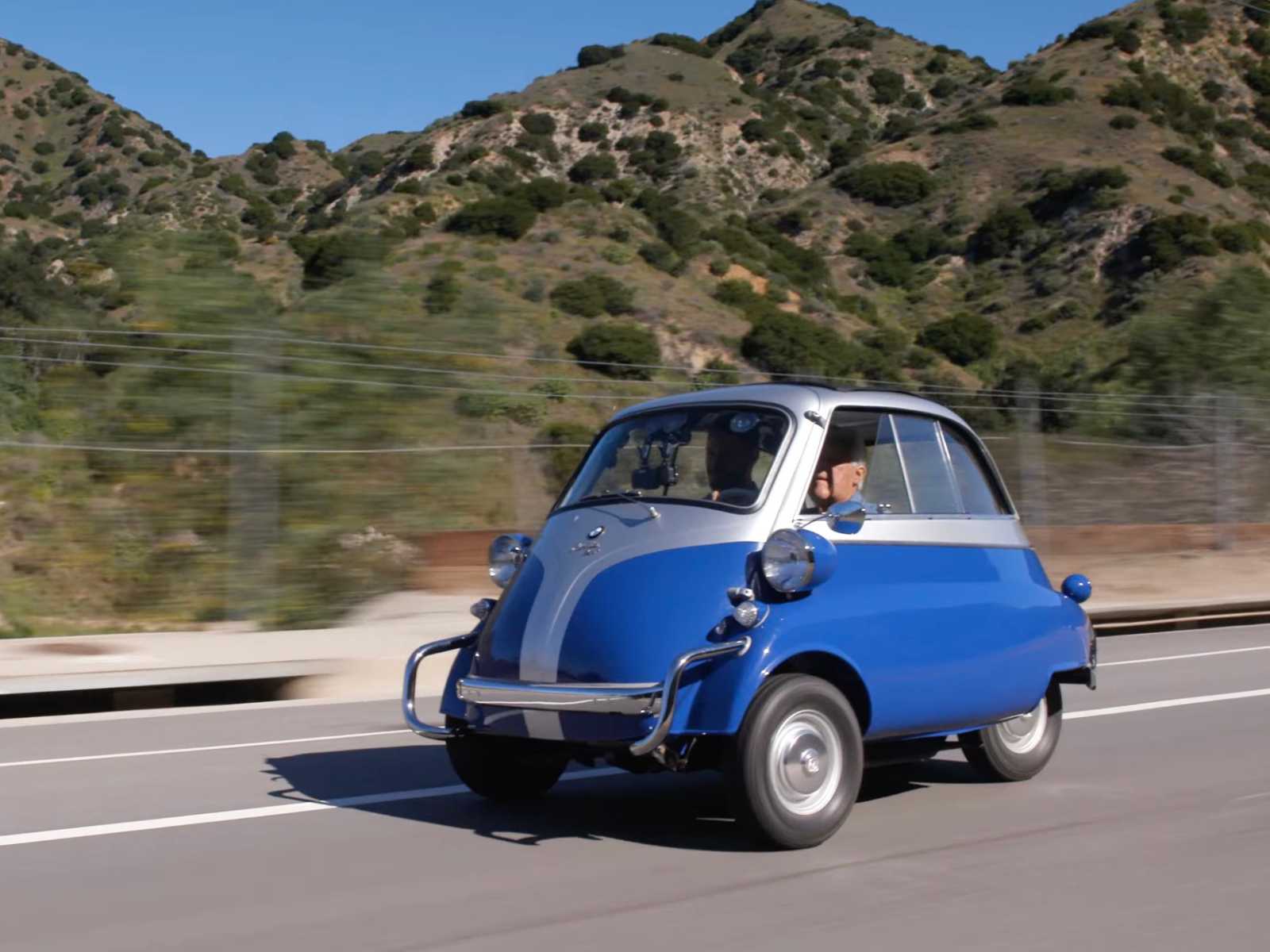
A bubble car by design, the BMW Isetta lacked a conventional door. Rather, drivers would enter the vehicle via the front-hinged windshield that swung out. The steering wheel and column were attached to the door assembly, which made it possible to enter the cabin from the front of the vehicle.
Motor Cities
Under Iso SpA, the original Italian Isetta rocked out with a 236cc two-stroke motorcycle engine that generated 9.5 horsepower. Unfortunately for the microcar, Fiat was a dominant force in Italy, and the automaker opted to license out the model to fund future projects while minimizing risk. Once it fell into BMW’s hands, the Isetta got upgraded to a one-cylinder four-stroke engine that produced 12 horsepower. The powerplant sat in the rear and drove the rear wheels.
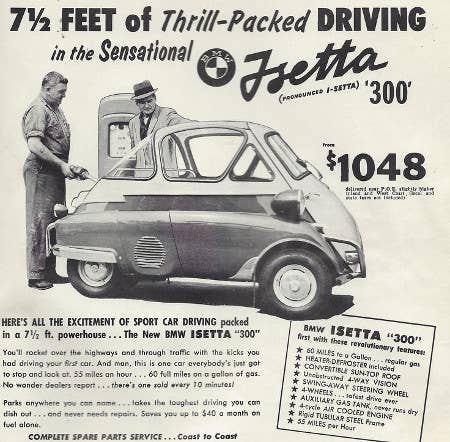
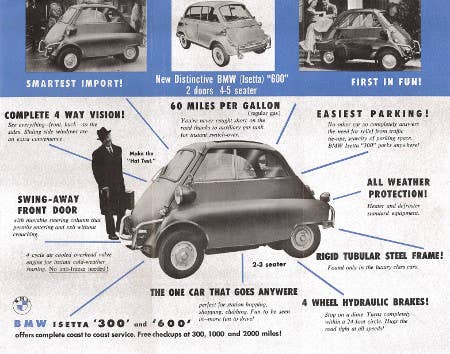
The first version of the German microcar rolled off the line at BMW’s Munich facility in April 1955. Naturally, the car’s performance wasn’t the selling point. The Isetta proved to be incredibly economical for both BMW and consumers. Priced from 2,550 Deutsche Marks, or roughly $606 in 1955, the microcar was a simple and affordable method of transportation for the average German worker. BMW specifically advertised the Isetta’s low operating costs and maneuverability in marketing material as well.
Advertisement
Motor Cities
Not long after, BMW introduced the Isetta 300, complete with a larger version of the engine. Performance output got bumped up to 13 horsepower and roughly 13.5 lb-ft of torque. While it may seem insignificant by today’s standards, the boost in power made the Isetta 300 more practical. In 1956, the Export model arrived, bringing with it a handful of improvements, including a revised chassis.
Shopping for a new car? Click here to get a great deal on your next vehicle. Powered by Carvana, no haggle pricing, 100% online.End of the Isetta
While an oddball at a glance, the Isetta proved to be the saving grace that BMW needed following World War II. Its small size offered the enclosed transportation that consumers desired while using less material and earning higher fuel economy than a normal family car. The microcar ultimately left the market following the 1962 model year, and its own success paved the way to its downfall.
Motor Cities
The Isetta essentially served as a financial bridge in the years following World War II. On the company side, it ensured that BMW’s Munich plant would continue to function without layoffs. As incomes rose and the economy recovered, the Isetta soon found itself falling out of style. When the 1960s made landfall, German consumers had more money and were less willing to compromise on space, performance, and practicality.
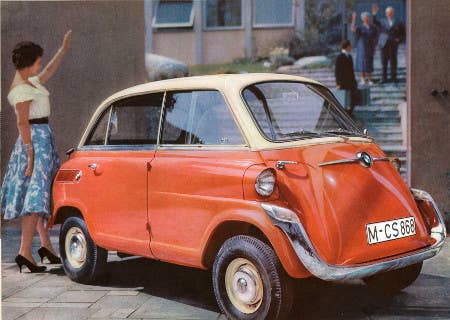
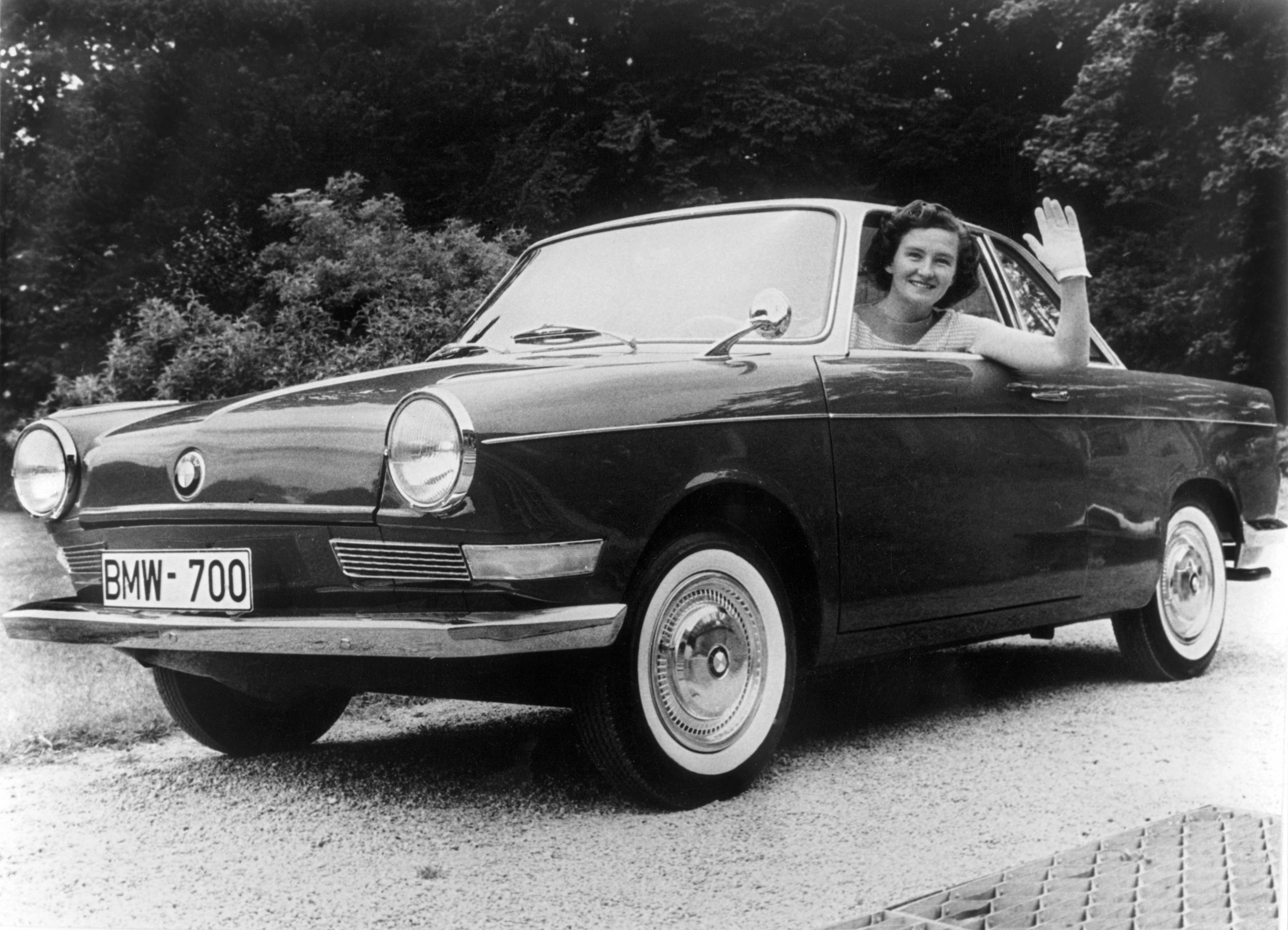
Fortunately, the German automaker was keeping up with consumer trends. The 1957 BMW 600 was essentially a larger version of the Isetta, with a more powerful engine and seating for four passengers. In 1959, the BMW 700 marked the transition from microcar to conventional automobile.
picture alliance / Getty Images
While the BMW 700 was clearly the future, the German automaker kept the Isetta on the roster for another three years. Between 1955 and 1962, BMW sold upwards of 161,000 examples of the Isetta, approximately 100,000 of which went to export markets. Rather than serve as a conventional vehicle, the microcar became an affordable solution to transportation needs in the early years of Europe’s economic recovery. Once European economies recovered, consumers could afford bigger and better vehicles, essentially sounding the death knell for the BMW Isetta.
Final thoughts
Jay Leno's Garage/YouTube
The BMW Isetta arrived just when the company needed a cheap, high-volume model. Not only did the microcar essentially save the German automaker from further financial hardship, particularly in the Munich facility, but it offered consumers affordable and efficient transportation. The Isetta holds a unique spot in European history, and its production essentially came to a natural end once its purpose had been served.
Disclaimer: Autoblog aims to feature only the best products and services. If you buy something via one of our links, we may earn a commission.
This story was originally published by Autoblog on Aug 29, 2026, where it first appeared in the Features section. Add Autoblog as a Preferred Source by clicking here.
Source: “AOL Money”
